The 23-Minute Tax — Why Every Email Check Is Costing You More Than You Think
Research shows it takes 23 minutes to refocus after checking email. Here's the real math behind your inbox addiction and how to reclaim 4+ hours daily.
Inbox Ninja Team
Inbox Ninja
The 23-Minute Tax — Why Every Email Check Is Costing You More Than You Think
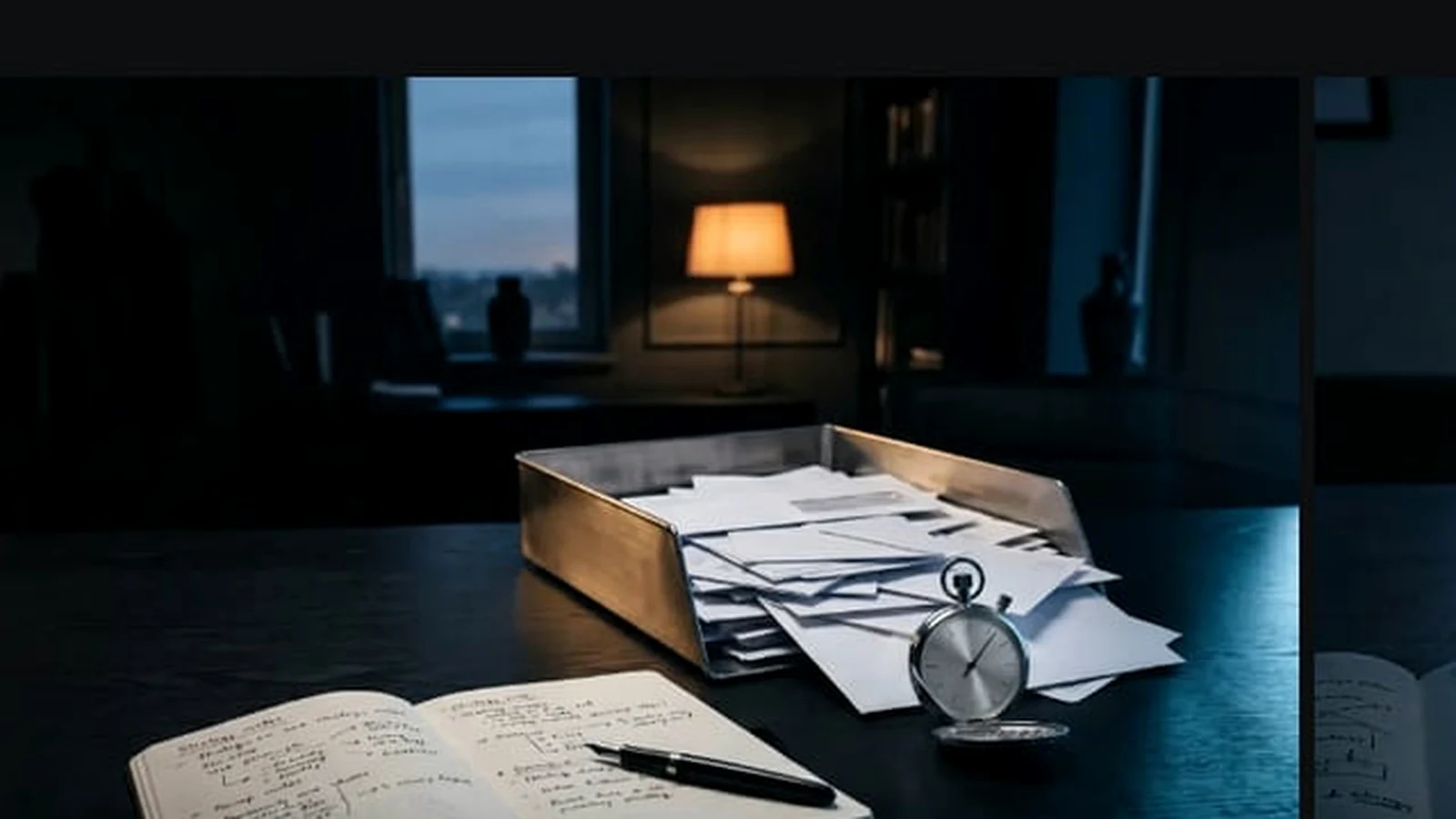
You check your email for thirty seconds. Just a quick peek. A subject line scan. Maybe you archive a newsletter or fire off a two-word reply.
No big deal, right?
Wrong.
That thirty-second check just cost you twenty-three minutes. Not of email time—of productive time. Time you could have spent on the presentation, the code review, the strategic thinking that actually moves your work forward.
This isn't hyperbole. It's not a productivity guru's scare tactic. It's peer-reviewed research from the University of California, Irvine, and it's been replicated across multiple studies. The average knowledge worker requires 23 minutes and 15 seconds to return to a task after an interruption.
And here's the kicker: most professionals check email every six minutes.
Let's do the math together. If you're checking email every six minutes across an eight-hour workday, that's roughly 80 checks. At 23 minutes of recovery time per check, you're losing... well, it's more than the workday contains. Which is exactly the point. If you check email constantly, you may never achieve genuine focused work during your entire day.
This is the 23-minute tax. It's invisible, it's relentless, and it's stealing your best work.
The Interruption Economy
We don't talk about email as an interruption. We talk about it as communication, as responsiveness, as professional diligence. But at a neurological level, every notification is a hard stop to whatever cognitive thread you were following.
Gloria Mark, the UC Irvine researcher who documented the 23-minute recovery time, has spent two decades studying workplace attention. Her findings paint a grim picture: the average knowledge worker switches tasks every 47 seconds. Not minutes—seconds. And roughly half of those interruptions are self-generated. We choose to break our own focus.
Why? Because focus is uncomfortable. It requires effort, resistance to distraction, and the emotional tolerance of not knowing. Checking email provides a micro-dose of novelty and completion. There's always something new in the inbox, and archiving or replying gives us a satisfying sense of closure—even when we've accomplished nothing meaningful.
The modern workplace has normalized this fragmentation. We wear our responsiveness like a badge of honor. "I'm always available," we say, as if that's something to be proud of. But availability and productivity are not the same thing. In fact, they're often in direct opposition.
The Real Cost of Context Switching
When we talk about email overload, we usually focus on volume. The 121 emails per day. The 28% of the workweek spent reading and responding. These numbers are alarming, but they're only half the story.
The bigger cost is what email does to the rest of your time.
Context switching isn't just a time cost—it's a cognitive cost. When you interrupt a task to check email, your brain doesn't simply pause and resume. It performs a complex unload-reload operation. The mental model you were holding? The variables, the edge cases, the creative thread? They don't stay suspended in working memory. They decay.
Research from the American Psychological Association shows that chronic multitasking and frequent context switching can consume up to 40% of a person's productive time. Not because the switching itself takes that long, but because the accumulated residue of incomplete tasks creates a persistent cognitive drag.
This phenomenon has a name: attention residue. When you switch from Task A to Task B, part of your attention remains stuck on Task A. You're physically working on the email, but mentally, you're still worrying about the unfinished presentation. The more you switch, the more residue accumulates, until you're operating at a fraction of your actual cognitive capacity.
The 23-minute figure represents full recovery—the time it takes to completely clear attention residue and return to deep focus. But most workers never get there. They check email again before the 23 minutes are up, resetting the clock, trapping themselves in a perpetual state of partial attention.
If you want the deeper systems explanation behind that loop, Why Your Inbox Is Broken maps the four missing signals—priority, context, timing, and completion—that keep attention residue alive in the first place.
The Myth of Efficient Multitasking
"But I'm good at multitasking," you might say. "I can check email and still get my work done."
No, you can't. And neither can anyone else.
The science on this is unequivocal. What we call multitasking is actually rapid task-switching, and it's cognitively expensive. A study from the University of London found that constant multitasking can temporarily reduce IQ by up to 15 points—more than smoking marijuana or losing a night's sleep.
When you "quickly check email" while working on a complex task, you're not doing two things at once. You're doing one thing (email), then stopping, then trying to rebuild the mental state required for the other thing (actual work). The cost of that rebuild is the 23 minutes.
Some tasks have higher switching costs than others. Creative work, strategic planning, and complex problem-solving all require holding multiple variables in working memory simultaneously. When you're interrupted, that entire structure collapses. Rebuilding it from scratch takes time and energy that you don't get back.
Email is particularly insidious because it feels productive. You're responding to colleagues. You're clearing your inbox. You're staying on top of things. But email is almost always administrative overhead, not value creation. The work that matters—the work you're actually evaluated on—happens outside the inbox.
How We Got Here: The Always-On Trap
The 23-minute tax isn't a personal failing. It's the result of systematic cultural and technological forces that have shaped modern work.
First, there's availability inflation. Thirty years ago, you could only be reached during business hours by phone or in person. Email expanded that window. Then smartphones made it 24/7. Now, with Slack, Teams, and mobile notifications, the expectation of constant availability has become implicit.
Microsoft's 2025 Work Trend Index reveals that 40% of employees check email before 6 a.m., and 85% receive work communications outside standard hours. The workday has dissolved into an "infinite workday," as Microsoft researchers call it—a continuous cycle of digital communication with no natural boundaries.
Second, there's responsiveness signaling. In many workplaces, quick email replies are interpreted as competence, dedication, and professional status. The person who responds in five minutes is seen as more engaged than the person who responds in five hours—even if the slower response is more thoughtful and the responder spent those five hours on deep, valuable work.
This creates a race to the bottom. When everyone is trying to signal responsiveness, everyone loses focus. The workplace becomes a collective attention deficit, where the ability to do uninterrupted deep work becomes a competitive advantage that few can actually exercise.
Third, there's the notification industrial complex. Email clients, collaboration tools, and project management software are all designed to pull you back in. Red badges, unread counters, push notifications, @mentions—these features exploit psychological vulnerabilities to maximize engagement. They're not neutral tools. They're actively working against your focus.
The Mathematics of Email Bankruptcy
Let's make this concrete with some numbers.
The average knowledge worker:
- Receives 121 emails per day (cloudHQ, 2025)
- Checks email 11 to 36 times per hour (varies by study)
- Spends 28% of the workweek on email—over 11 hours (McKinsey)
- Requires 23 minutes to refocus after each interruption (UC Irvine)
If you check email 20 times per day (a conservative estimate for most professionals), that's:
- 20 checks × 23 minutes = 460 minutes of focus recovery
- 460 minutes = 7.6 hours
In an 8-hour workday, checking email 20 times leaves you with negative time for actual work. This is why email feels all-consuming. It literally is.
The heaviest email users—the top 25%—spend 8.8 hours per week on email alone. That's more than a full workday every week just managing messages. And that doesn't include the context-switching tax, which roughly doubles the effective cost.
Over a 45-year career, this adds up to nearly 3,000 working days spent on email—more than eight years of your professional life dedicated to a communication channel that didn't exist for most of human history.
Why Traditional Solutions Fail
The productivity industry has offered plenty of solutions to email overload. Most of them fail because they don't address the root cause: the interruption pattern itself.
Inbox Zero treats the symptom (unread messages) rather than the disease (constant checking). Achieving inbox zero feels satisfying, but it's temporary. New emails arrive immediately, and the anxiety returns. Worse, the pursuit of inbox zero can increase checking frequency, as users obsessively monitor their inboxes to maintain the pristine state.
Email filters and folders help with organization but don't reduce interruptions. They just change where the interruptions appear. If you're still getting notified about every filtered message, you haven't solved the problem—you've just moved it.
Unsubscribing from newsletters is worthwhile but insufficient. Even if you cut your email volume in half, you're still dealing with 60 messages per day. That's still an interruption every eight minutes during an eight-hour day.
Time-blocking is a better approach—scheduling specific times for email processing—but it requires discipline and cultural support. If your team expects instant responses, checking email only twice a day feels like professional suicide, even when it produces better work.
The real solution requires changing not just individual behavior but the relationship between the individual and their communication tools. That is also why a draft-first workflow matters: our guide to AI Email Writer Strategy: Draft, Don't Decide shows how turning open loops into ready-to-send drafts cuts the number of context reloads per message.
The Batching Alternative
What if you could reclaim those 23 minutes? What if, instead of paying the focus tax 20 times a day, you paid it 3 times?
Email batching—processing email at scheduled intervals rather than continuously—is the only intervention that has been shown to reliably reduce the 23-minute tax. By consolidating email into discrete sessions, you limit the number of context switches and protect larger blocks of time for deep work.
The research supports this approach. A study from the University of British Columbia found that limiting email checks to three times per day significantly reduced stress and increased perceived productivity compared to unlimited checking. Participants weren't just more productive—they felt better.
Here's a simple batching framework:
The 3-Session Structure
- Morning triage (20-30 minutes): Process overnight email, identify true emergencies, archive or defer everything else. Don't compose lengthy replies—just sort.
- Midday processing (30-45 minutes): Handle responses that require thought, compose new messages, delegate or defer tasks. This is your main email work session.
- End-of-day cleanup (15-20 minutes): Clear remaining items, set up tomorrow's priorities, archive everything. Leave with an empty or minimally-loaded inbox.
Total time: 65-95 minutes. Compare that to the 11+ hours per week the average worker spends in fragmented email mode. Batching saves hours, not minutes.
The Technology Lockdown Batching only works if you actually close email between sessions. This means:
- Quitting the email application (not just minimizing)
- Disabling notifications on all devices
- Using website blockers if necessary during focus periods
- Communicating your availability window to colleagues
The discomfort you feel when you first try this—the phantom vibration, the urge to check, the fear of missing something urgent—is withdrawal. Your brain has been trained to seek the dopamine hit of new messages. Reclaiming your attention requires unlearning that conditioning.
Setting Boundaries That Stick
Individual batching is necessary but not sufficient. The 23-minute tax is a collective problem, and it requires collective solutions.
Response time expectations: Have explicit conversations with your team about expected response times. Most emails don't require same-day responses, let alone immediate ones. When everyone assumes urgency, everyone pays the tax. When urgency is reserved for actual emergencies, the tax drops.
Communication protocols: Establish which channels are appropriate for which types of communication. Urgent matters might warrant Slack or phone calls. Routine matters can wait for email batches. Documentation lives in wikis, not email threads. When each channel has a clear purpose, email volume naturally decreases.
Meeting-free focus blocks: Protect calendar time for deep work. When email checking is the only interruption-free activity available, people default to it. When two-hour focus blocks are institutionally protected, people can actually use them.
Cultural modeling: Leaders and high-performers set the tone. When senior people respond to emails in minutes, junior people feel pressure to do the same. When senior people visibly protect their focus time, permission cascades through the organization.
The AI-Assisted Compromise
Modern AI tools offer a middle path between constant availability and complete disconnection. They can't eliminate the 23-minute tax, but they can reduce the friction of returning to email after a focus period.
Email summarization: AI can condense long threads into key points, reducing the time required to get back up to speed. What might take 5 minutes of careful reading can be absorbed in 30 seconds.
Draft generation: AI can compose initial replies based on your brief notes or bullet points. You still review and send, but the blank-page resistance is eliminated.
Priority triage: AI can scan incoming email and surface only the messages that actually require your attention, filtering out newsletters, notifications, and FYIs that don't need immediate processing.
These tools don't replace batching, but they make batching more sustainable. When you know that AI will help you process your accumulated email efficiently, the psychological barrier to closing your inbox drops. If you are choosing tooling right now, our comparison of the best AI email writer tools in 2026 breaks down which products actually reduce editing burden instead of just generating more cleanup work.
Tools like Inbox Ninja combine these capabilities—summarization, drafting, and intelligent triage—into a single workflow that respects your focus time while keeping you responsive when you choose to engage.
Measuring What Matters
The ultimate goal isn't to spend less time on email. It's to spend more time on work that matters.
Track the right metrics:
- Deep work hours: How many uninterrupted 90+ minute blocks do you achieve per week?
- Task completion rate: Are you finishing your most important tasks, or just staying busy?
- Response quality: Are your email replies thoughtful and useful, or rushed and incomplete?
- Cognitive load: How often do you think about work after hours? How rested do you feel?
If you're spending 11 hours on email but completing zero strategic projects, you're not productive—you're busy. The 23-minute tax is the hidden mechanism that keeps you there.
The Path Forward
The 23-minute tax isn't going away. As long as we use email, interruptions will carry a recovery cost. But we can choose how often we pay it.
The path to reclaiming your focus has three steps:
1. Acknowledge the cost. Most professionals have no idea how much email interruptions are actually costing them. Once you understand the 23-minute tax, every "quick check" becomes a conscious choice with a known price.
2. Implement batching. Schedule specific times for email processing. Close your email application between sessions. Accept the temporary discomfort of disconnection as the cost of deeper work.
3. Change the culture. Talk to your team about response expectations. Model focus time. Protect each other's attention the way you'd protect any other valuable resource.
Email is a tool. It's not your job. And it certainly shouldn't be the thing that prevents you from doing your job.
The 23 minutes after each interruption? That's your life. That's your best work. That's the presentation that could win the client, the code that could ship the feature, the insight that could change the strategy.
Every time you check email unnecessarily, you're giving that away. The question is: for what?
Ready to reclaim your focus? Inbox Ninja helps you batch, summarize, and delegate your email—so you can get back to work that matters.
Related Articles
Why Your Inbox Is Broken (And Why Inbox Zero Won't Fix It)
Email was designed in 1971. SMTP was standardized in 1982. The interface you used this morning is architecturally identical to both. Here's why no amount of discipline will fix what's fundamentally a design failure.
The Coordination Tax: Why You're Spending 57% of Your Week on 'Work About Work'
Research reveals knowledge workers spend 57% of their time coordinating instead of creating. Here's the real cost and how to reclaim your focus.
Inbox Zero: How to Actually Achieve It With an AI Email Assistant
A practical inbox zero guide that shows how to actually achieve inbox zero with filters, batching, and an AI email assistant.
Ready to hit inbox zero?
Inbox Ninja triages your email, summarizes threads, and drafts replies in your voice.
Open Inbox Ninja